Capital in the Twenty-First Century or the Return of History
My little book review on Capital in the Twenty-First Century by Thomas Piketty.
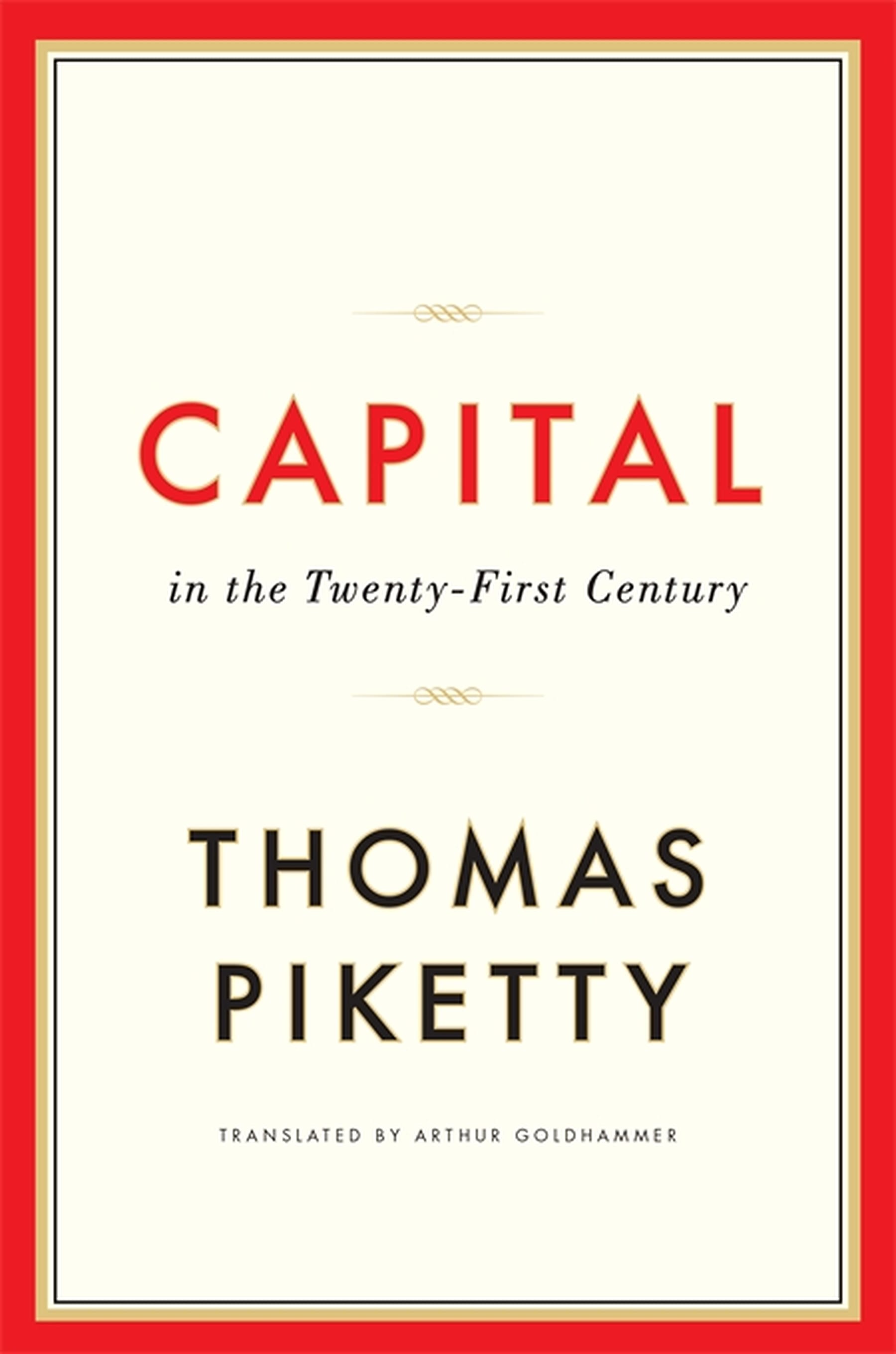
Capital in the Twenty-First Century or the Return of History
I recently finished the monumental work of French economist Thomas Piketty, Capital in the Twenty-First Century.
I was deeply impressed by the book. Despite being a thoroughly economic work, I found in it both practical and philosophical conclusions.
I had often heard the common idea that the best investments are in real estate, and that it is better to work for yourself rather than for an “uncle” — as we commonly say in Russia. In his work, Piketty uses remarkably simple mathematical and economic relationships to explain why this can be advantageous from the perspective of economic returns, profits, and returns on capital.
But what interested me most was the book as yet another challenge to Francis Fukuyama’s “end of history” thesis. I would even argue that Piketty provides something close to a mathematical refutation of it.
According to Piketty’s sources — and there are plenty of them, enough to fill more than a hundred pages of notes and references — the history of economic inequality took a dramatic turn between 1914 and the 1960s. Beginning in the 1970s, however, inequality steadily moved back toward the catastrophic levels of 1900–1913, when the richest 10% of the population owned roughly 90% of private wealth.
The structure and circumstances of inequality have certainly changed since then. Yet the absolute figures suggest that humanity — and this is an important qualification, on average — has returned to levels of inequality comparable to those of a century ago.
These were the very conditions that preceded the catastrophes of the first half of the twentieth century.
Thinking back to Fukuyama’s work and his references to the Hegelian mechanism of historical development — the dialectical process driven by contradictions and their eventual synthesis — it seems reasonable, in my view, to conclude that we should not expect the “end of history” anytime soon.
The current form of capitalism — neoliberalism, which emerged as a successor to Keynesianism — has, over the past several decades, produced increasingly significant economic inequality.
And inequality itself represents a contradiction.
Perhaps our generation will witness the emergence of a new stage of social development — one capable of resolving this contradiction and carrying humanity toward another stage of history.