SoloLearner
A web application to learn interactively virtually anything
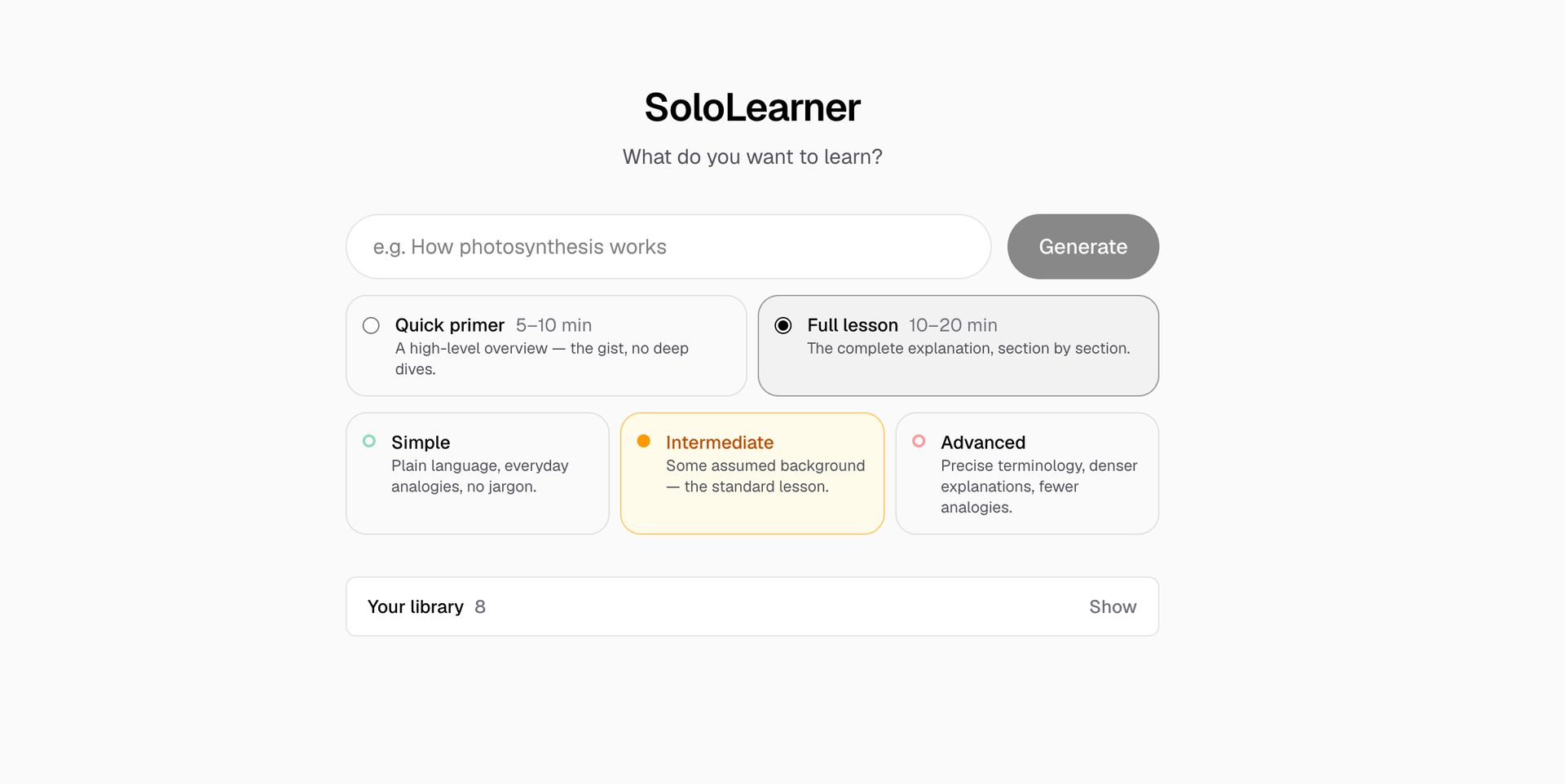
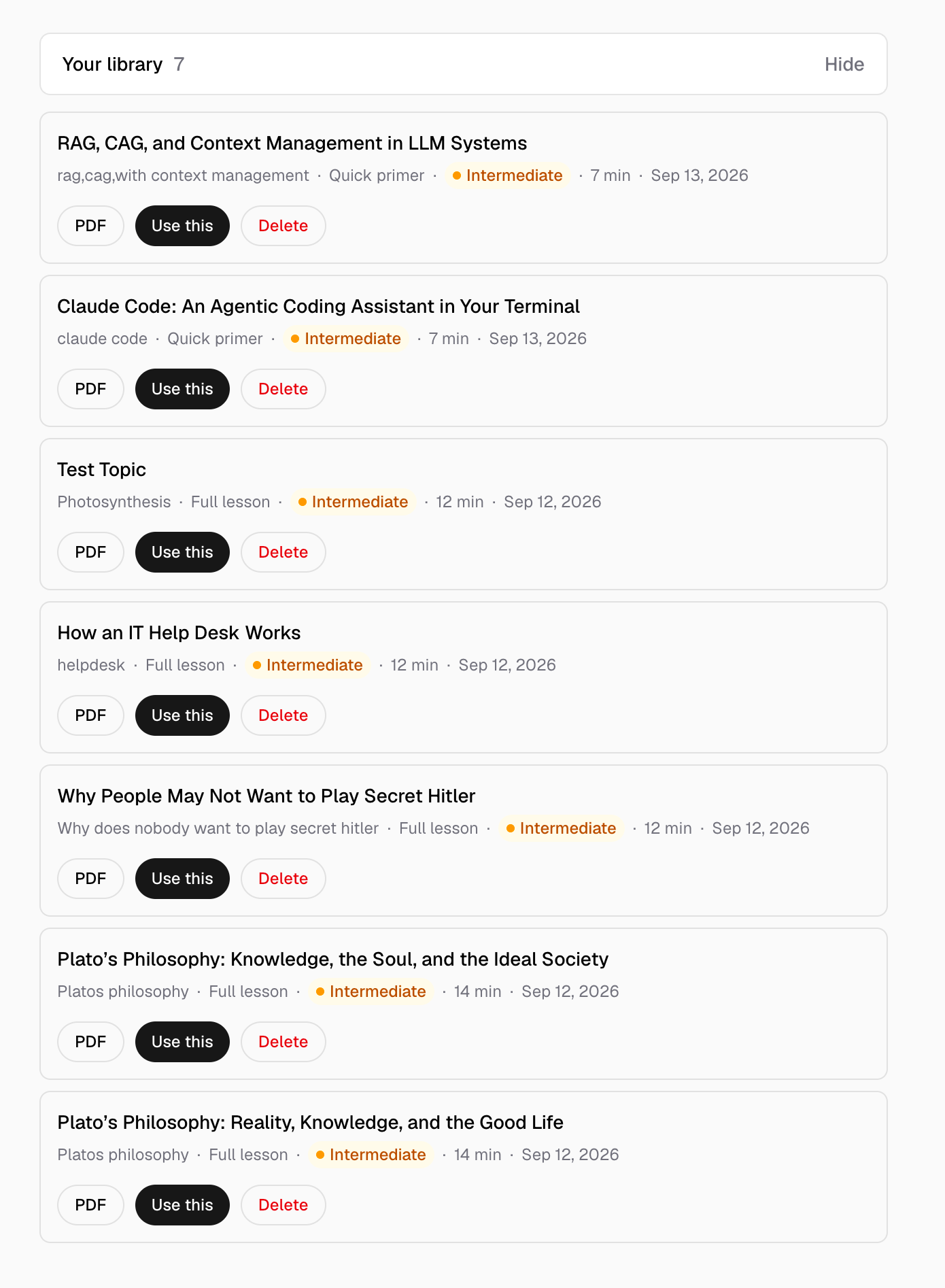
SoloLearner — an AI-powered learning companion
SoloLearner is a project built around a simple idea: learning something new shouldn't require spending hours figuring out where to start.
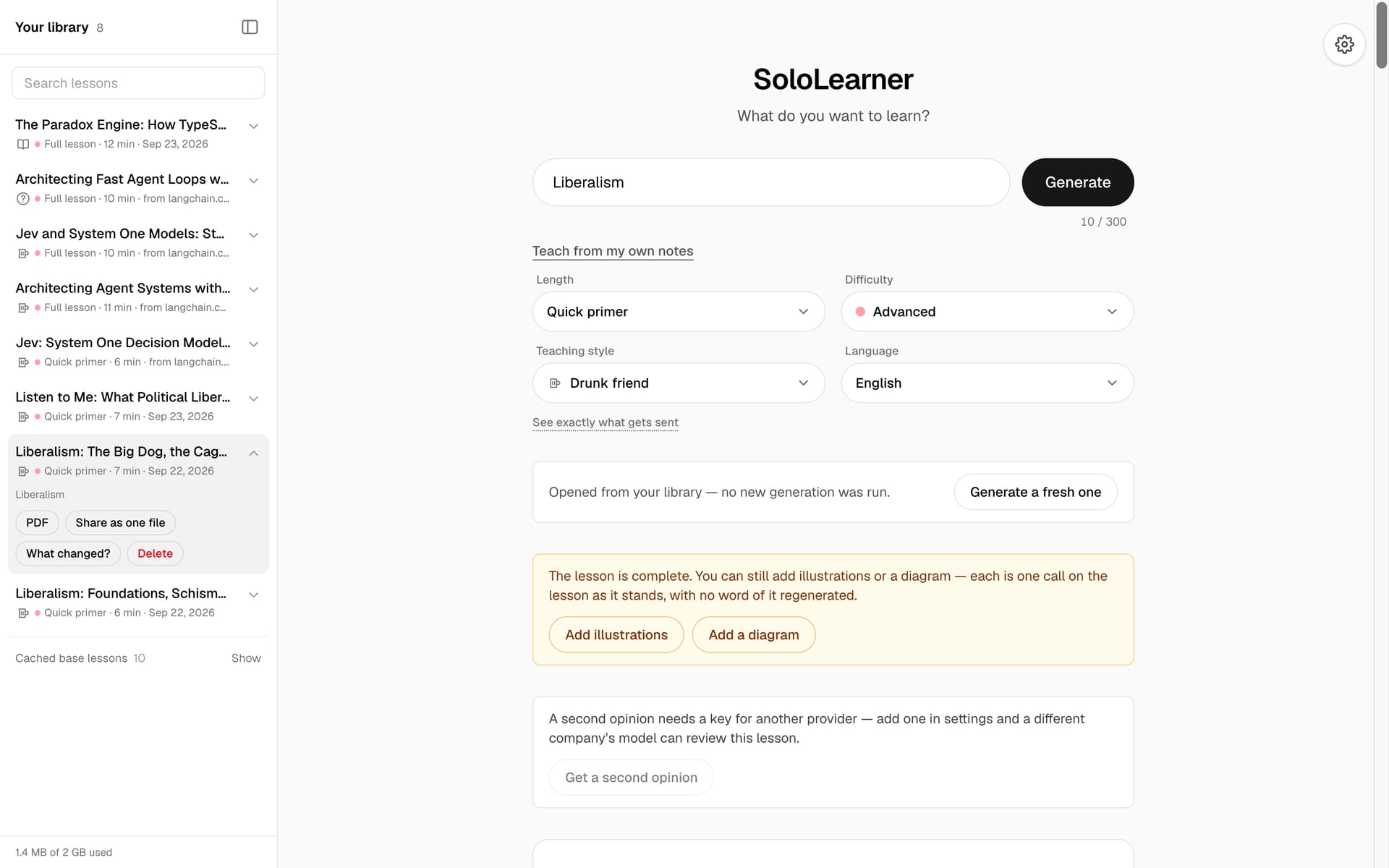
You tell SoloLearner what you're curious about, and it creates a focused lesson designed around the amount of time you have — from a quick 5–10 minute introduction to a more in-depth lesson.
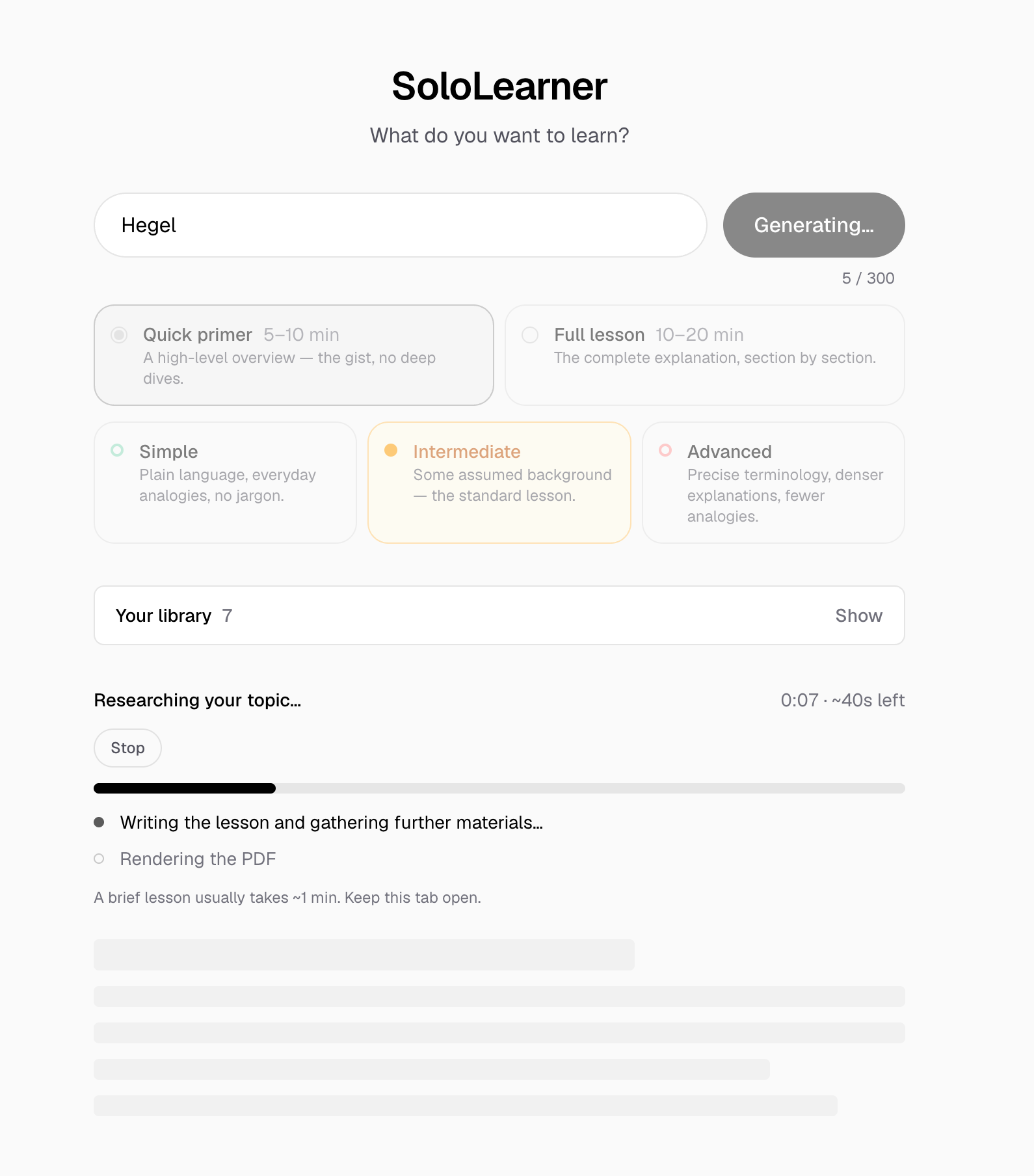
Instead of just giving you a wall of information, it explains the topic step by step, highlights the important ideas, provides illustrations and a mind map, and points you toward useful books, articles, and videos for going deeper.
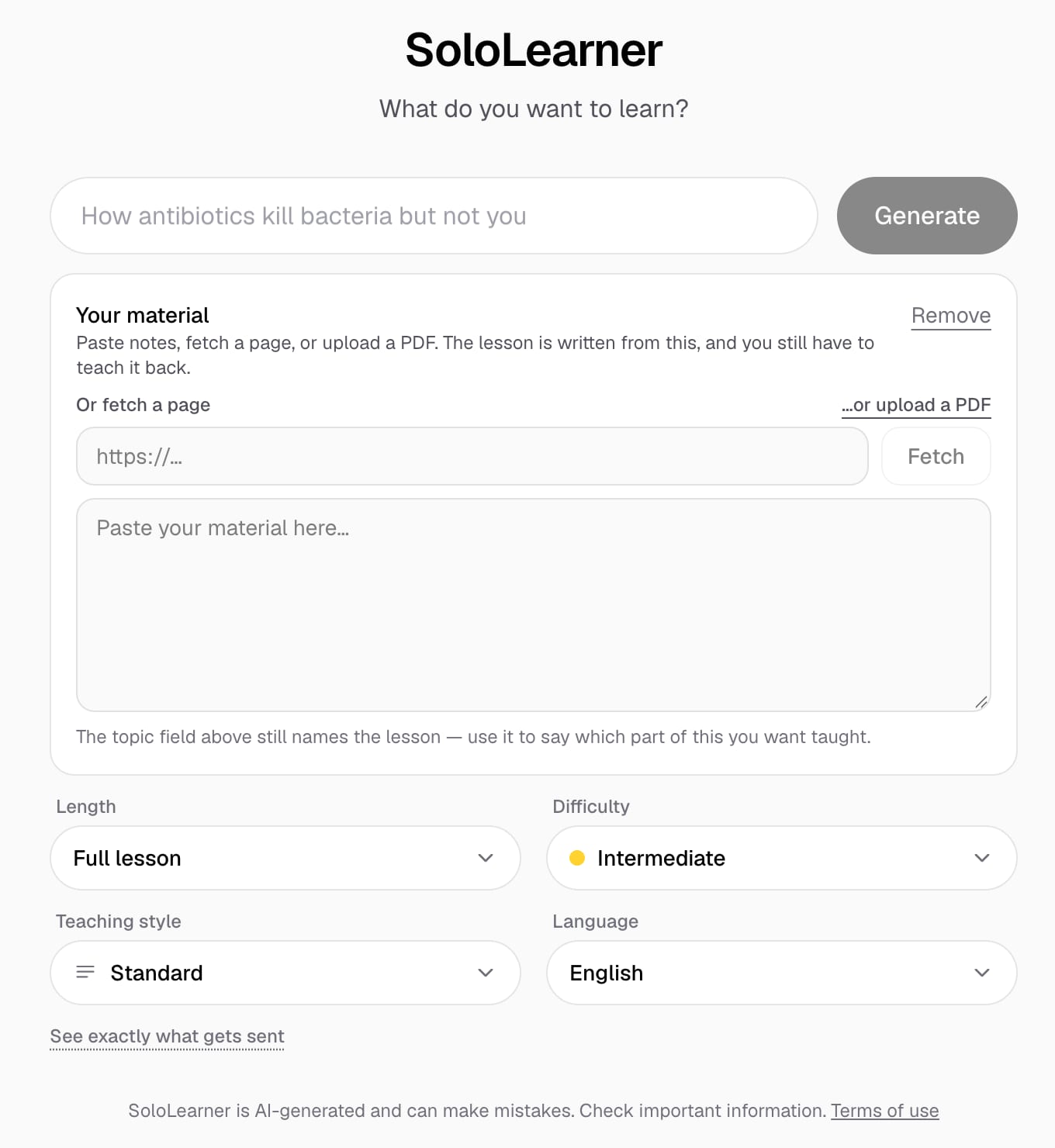
Learn from anything — including your own material
A lesson doesn't have to start from a topic anymore. You can paste your own notes, give it a link to fetch, or upload a PDF, and SoloLearner builds the lesson from that material. You still have to teach it back at the end.
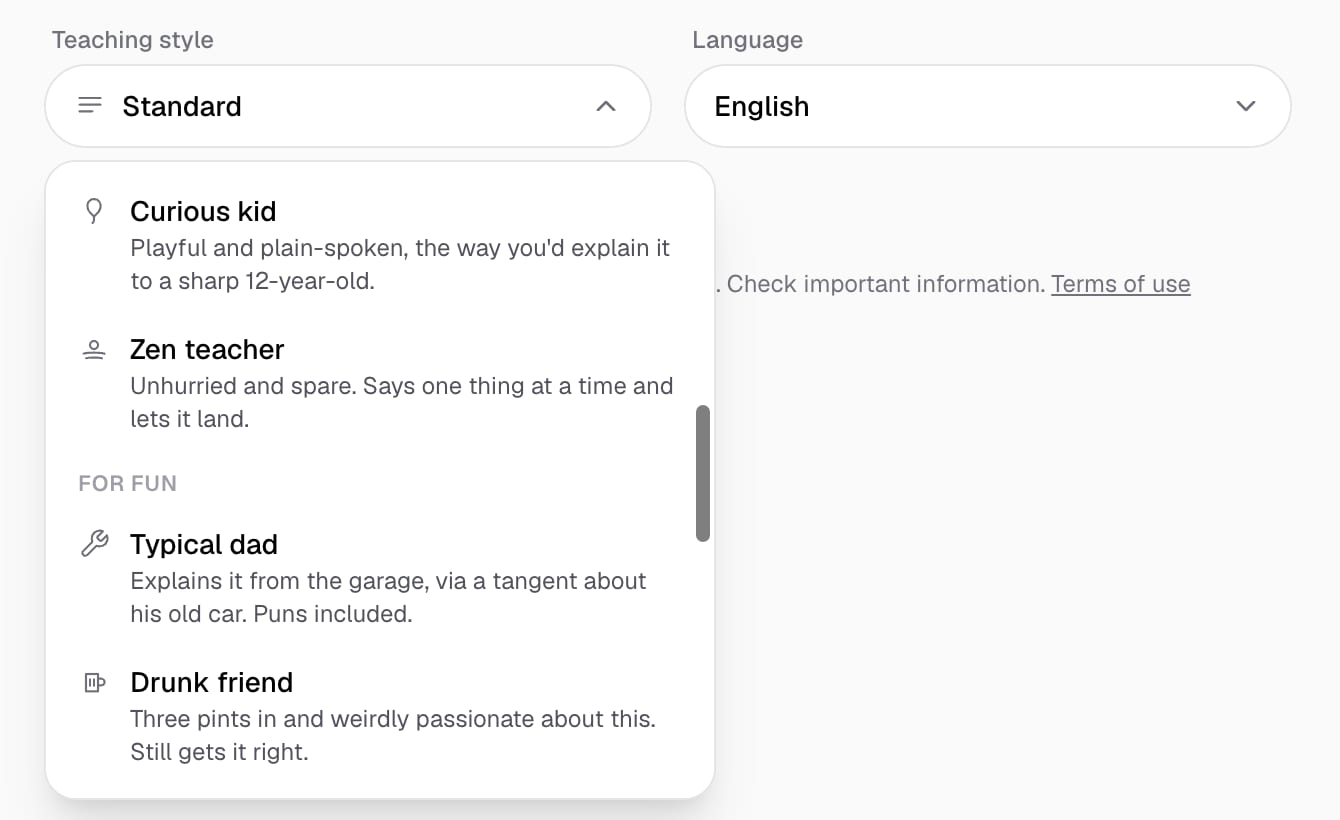
Taught the way you like to learn
The same lesson can be told in very different ways. There are teaching styles — Feynman-style first principles, Socratic questions, a storyteller, "myths first" — and voices like a friend over coffee, a coach, or a Zen teacher. For fun there is also a typical dad, a noir detective, a pirate, a nature documentary narrator and more. The facts stay the same; only the telling changes.
Lessons can be written in eight languages, and you choose the model yourself: ChatGPT, Claude, Gemini or Grok, on your own API key.
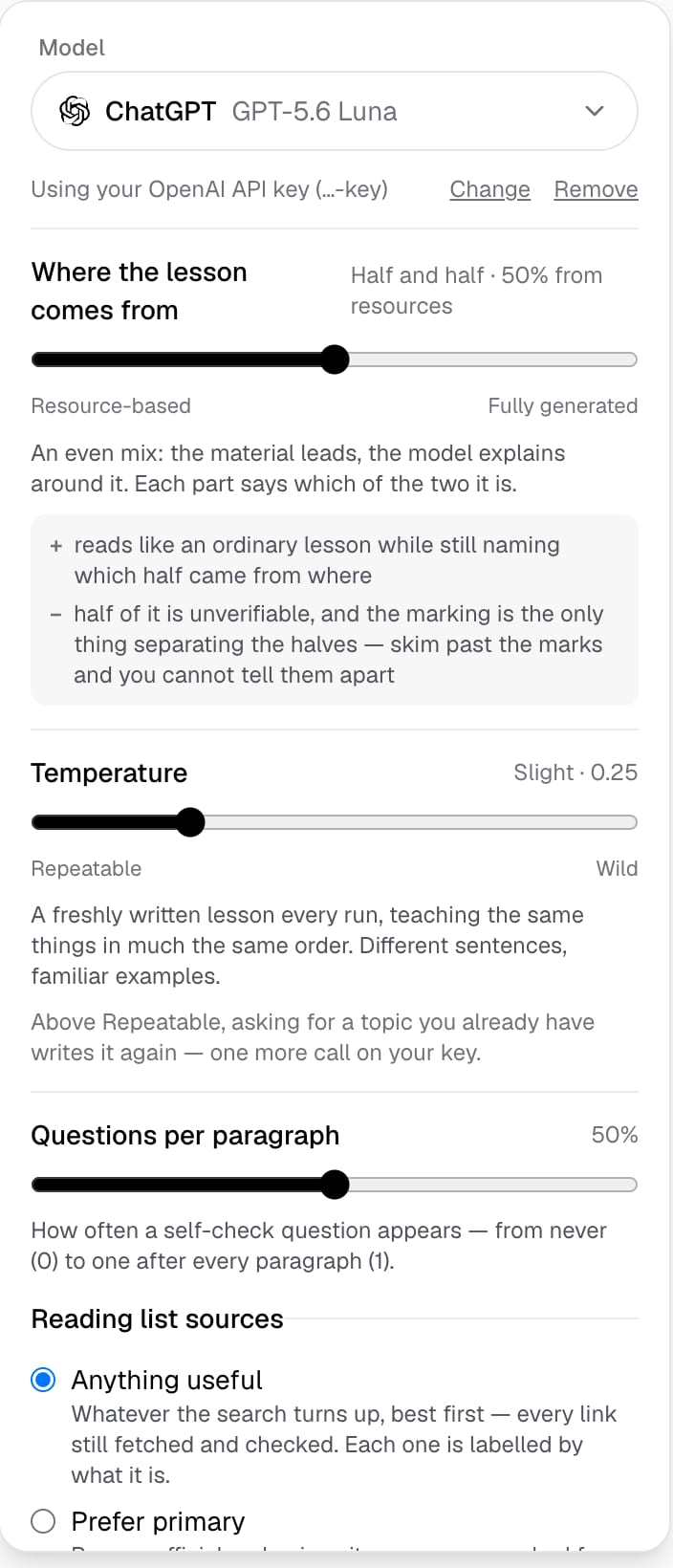
You decide what the lesson rests on
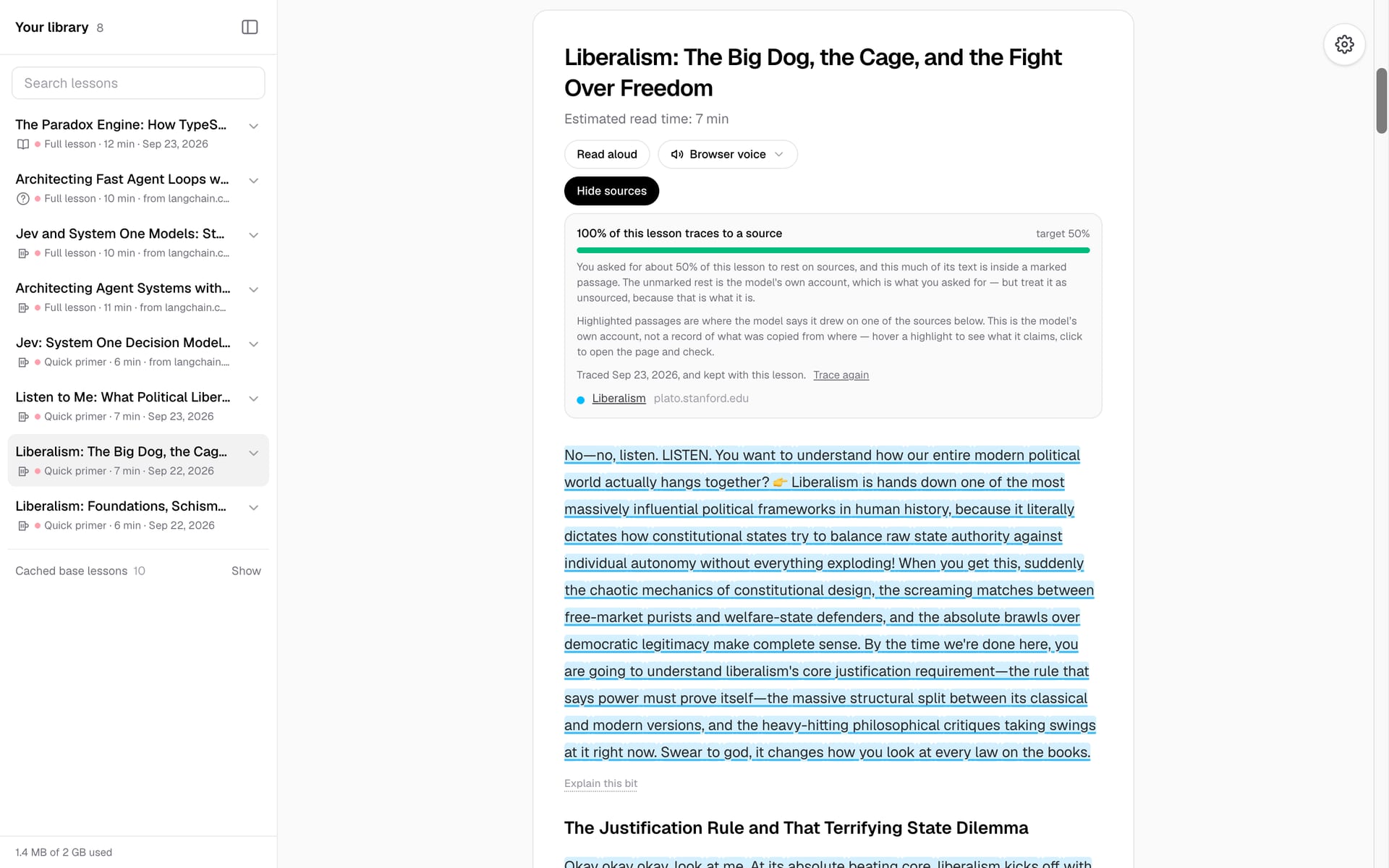
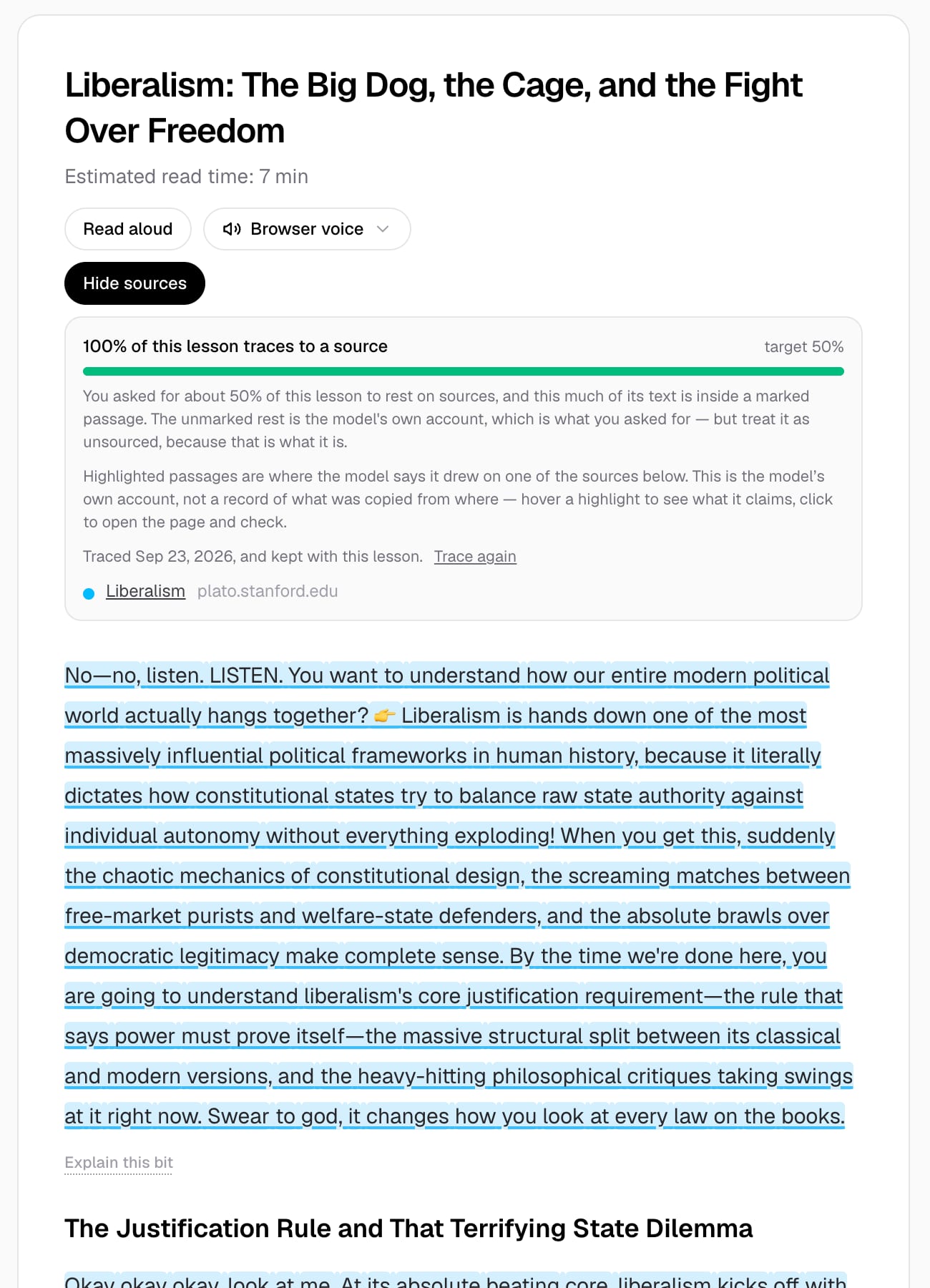
AI lessons have one big problem: a confident wrong sentence looks exactly like a right one. So SoloLearner has a slider from resource-based to fully generated. At the resource-based end, the app first runs a live web search and the lesson may only use what those pages actually say. In between, every passage the model wrote from its own knowledge is marked as such.
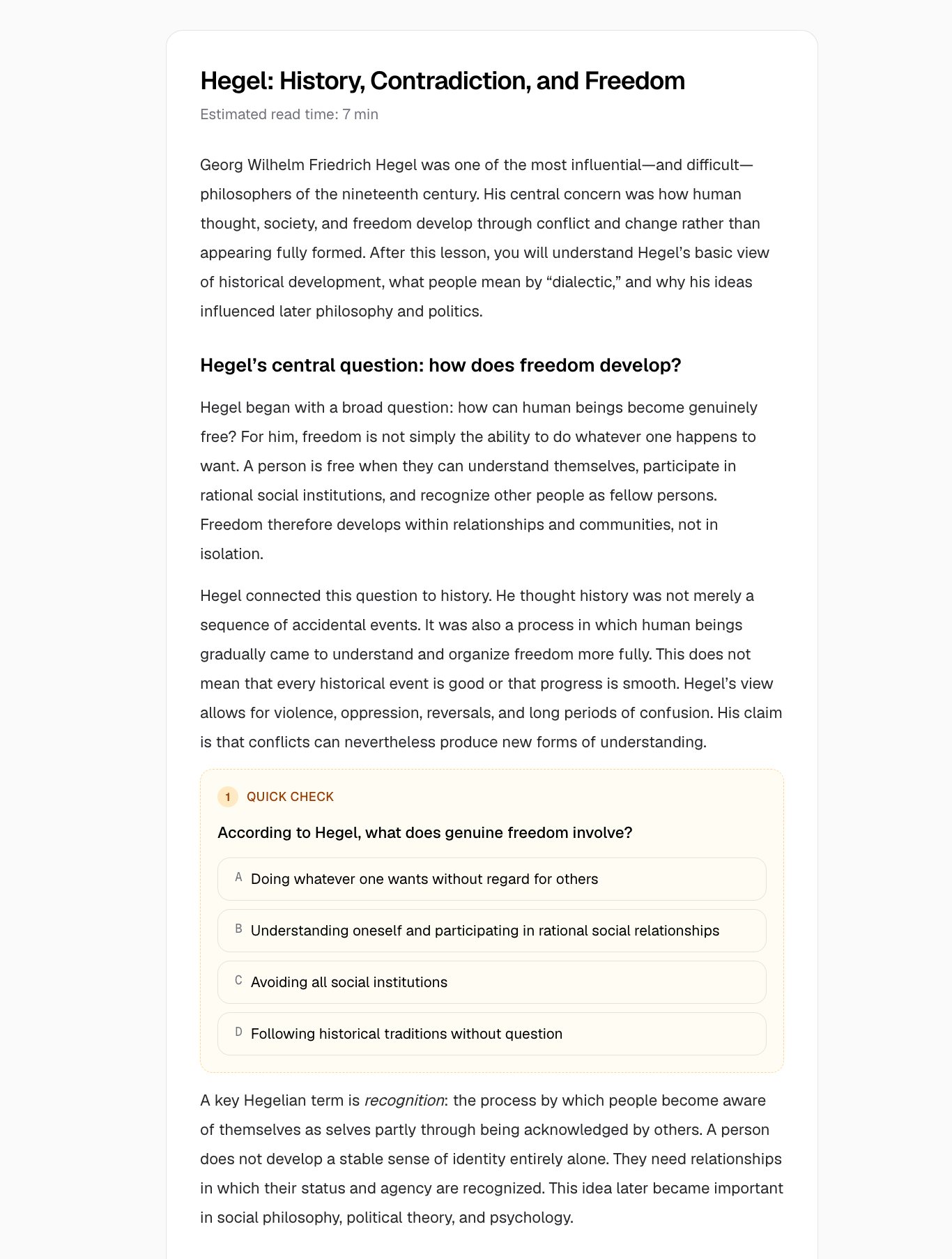
Turn on Show sources and the lesson highlights every passage that traces back to a source. Hover a highlight to see what it claims; click it to open the page and check for yourself.
Honest about where everything came from
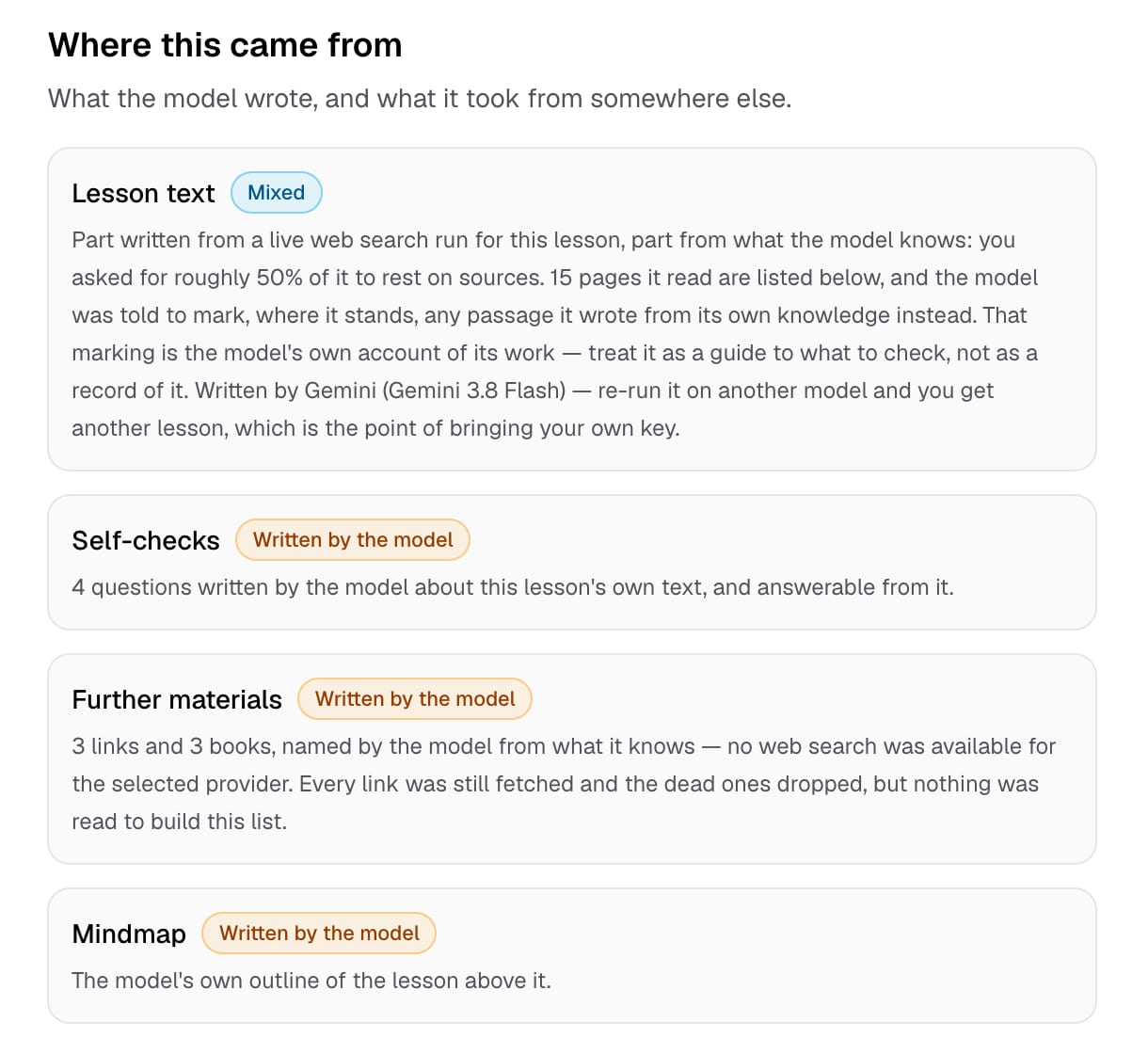
Every lesson ends with a short "Where this came from" section: which parts were written by the model, which came from a search, the pages that search read, and which model wrote it. The reading list can be held to primary sources only (papers, official and university pages), and exported as a ready-to-paste bibliography.
If you have keys for two providers, you can also ask for a second opinion: a model from a different company reviews the lesson, and its comments appear beside the claims they dispute. They're never applied automatically, because the reviewer has no more access to the truth than the writer does.
More ways to use a lesson
- Read aloud: follow the voice word by word, and interrupt the narration to ask a question.
- Explain this bit: a simpler explanation of any single paragraph, on demand.
- Diagrams: the app draws a diagram of the lesson instead of borrowing a stock picture.
- Share as one file: the whole lesson, with working self-checks, as a single HTML file, or a print-first PDF study kit.
- What changed?: re-check a saved lesson's reading list later without rewriting the lesson.
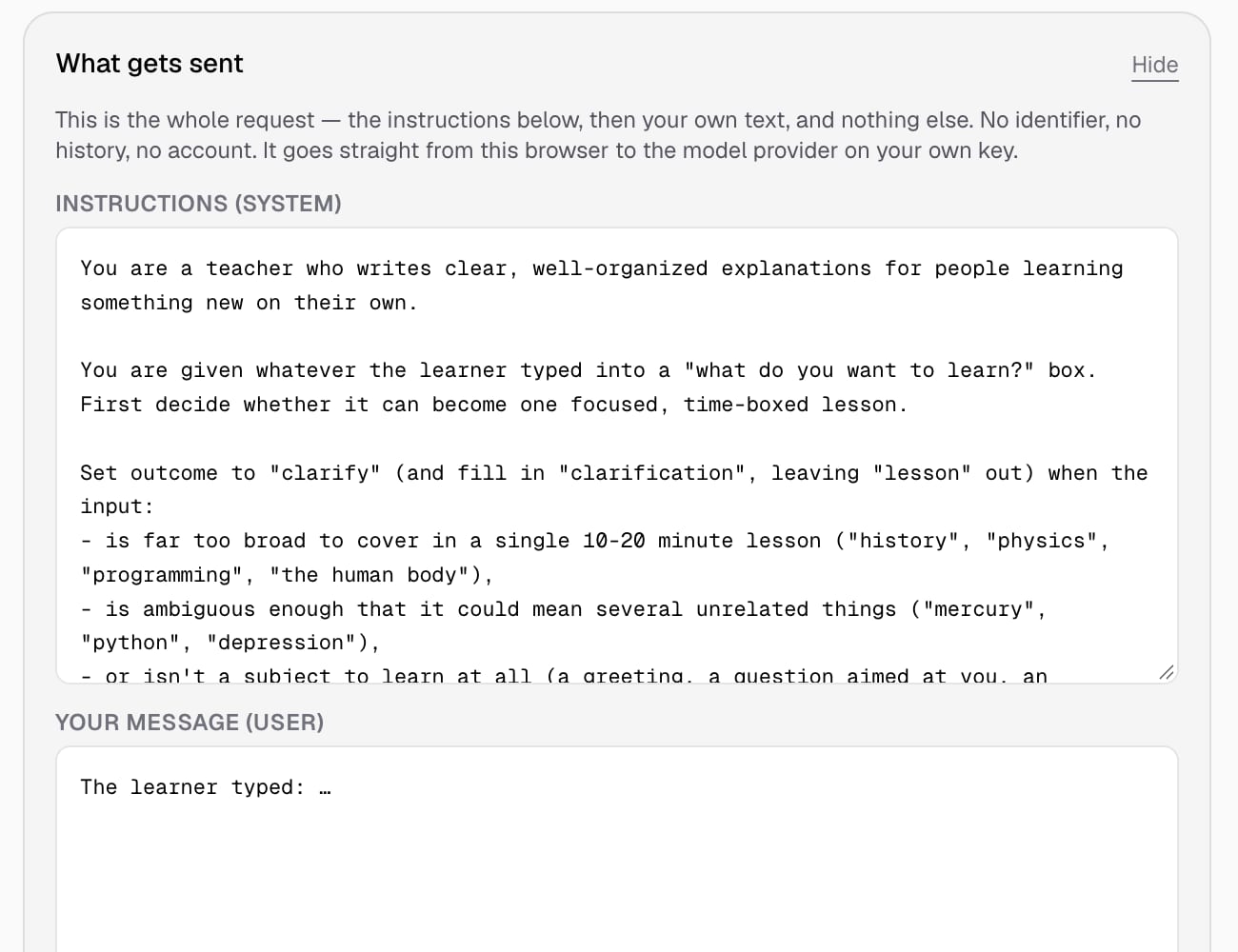
- See exactly what gets sent: the full request, before it goes to the model. No account, no tracking.
Learning by teaching — now built
The most interesting part still comes after the lesson, and it is no longer only a plan.
SoloLearner's core idea is learning by teaching: you explain the topic in your own words to an AI that plays a student, and it shows you where your understanding has holes. That is now a real conversation. You explain, the student reacts, tells you what landed and asks about the part that didn't. You answer, and it keeps going for up to six turns.
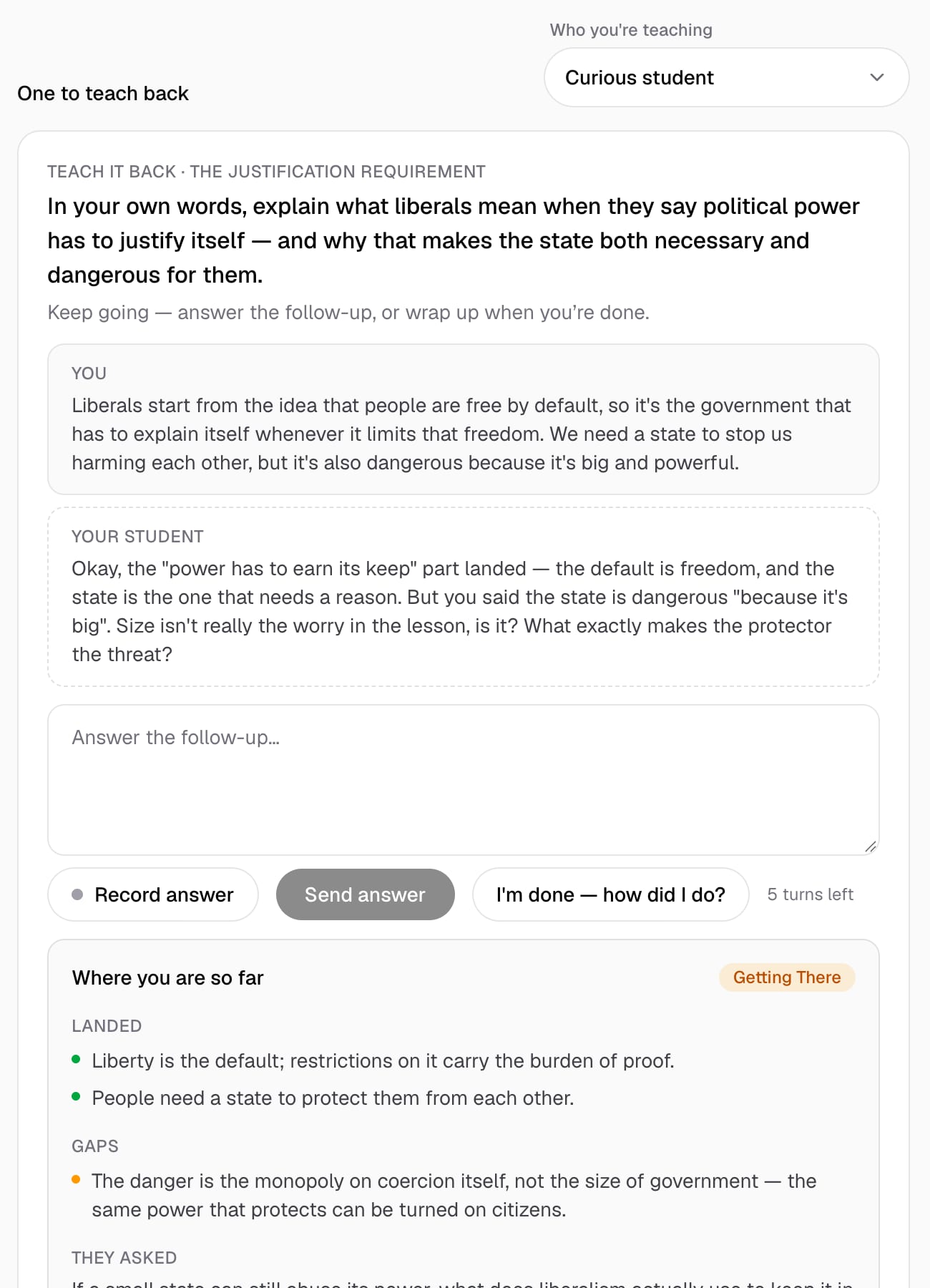
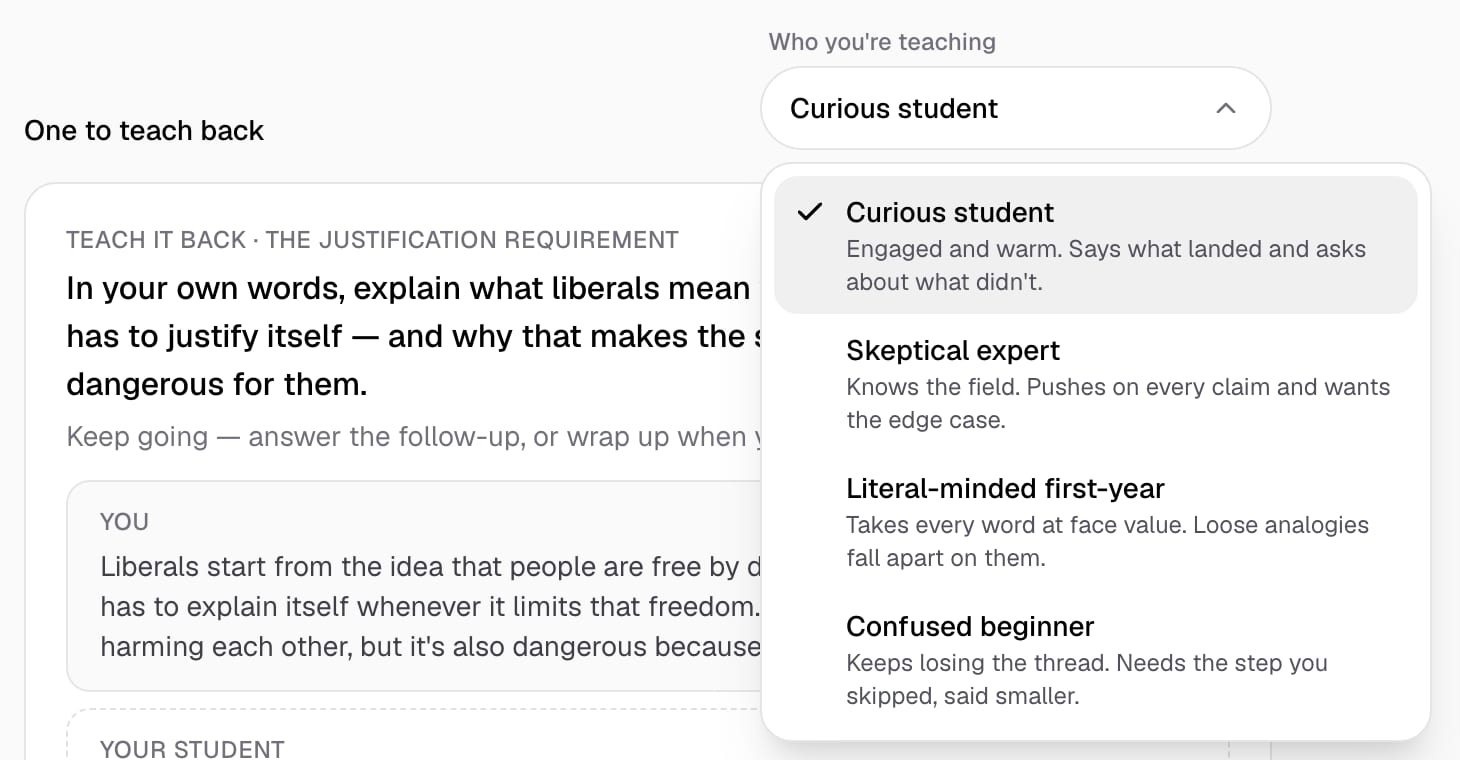
You also pick who you're teaching: a curious student, a skeptical expert who pushes on every claim, a literal-minded first-year who trips on loose analogies, or a confused beginner who needs the step you skipped. The character changes the questions, never the grading.
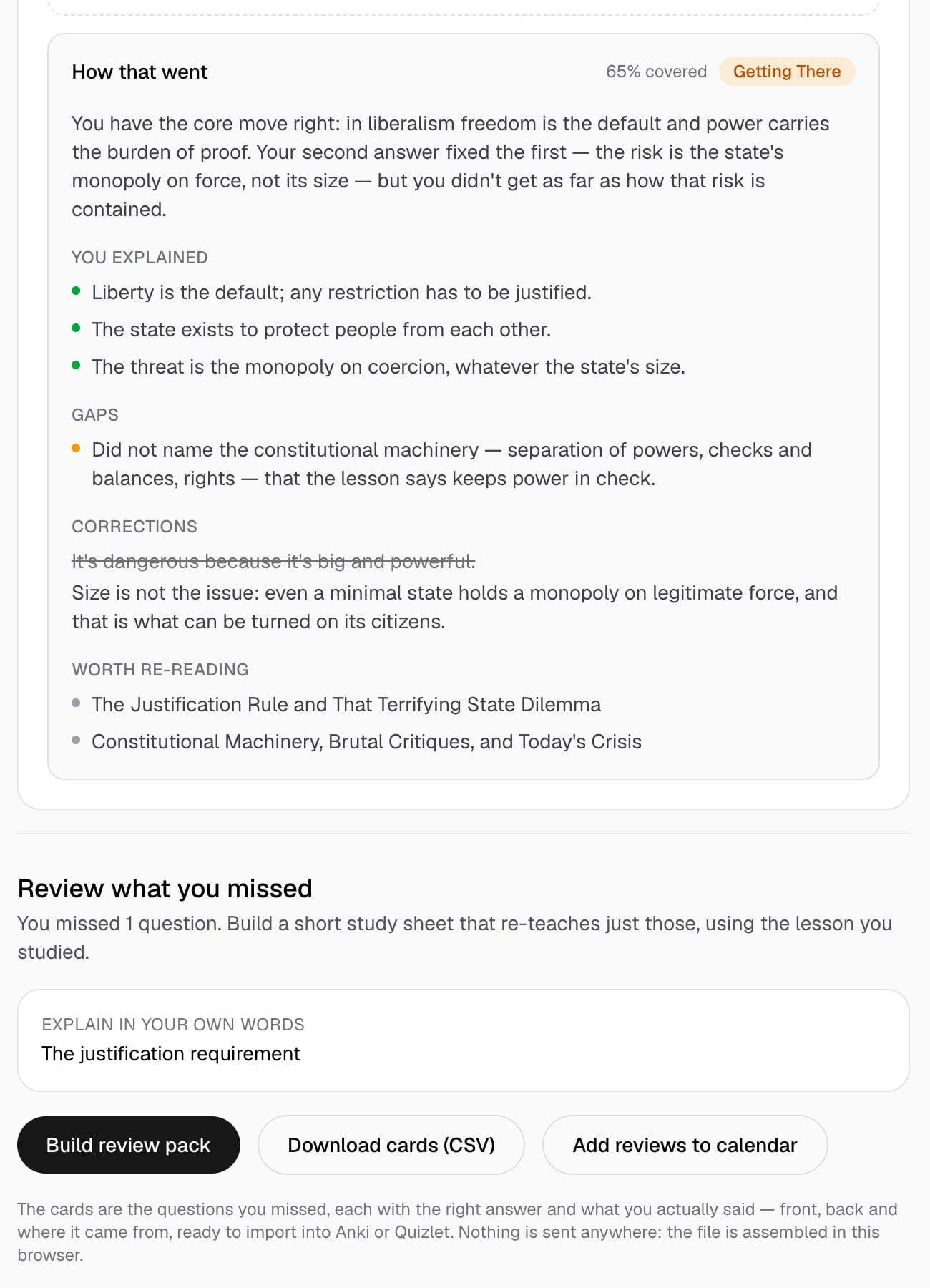
When you're done, you get a plain report: how much of the idea you covered, what you explained well, what you missed, and the exact things you got wrong, with corrections. What you missed can leave with you as flashcards for Anki or Quizlet, or as review reminders in your own calendar spaced 1, 3, 7, 16 and 35 days out.
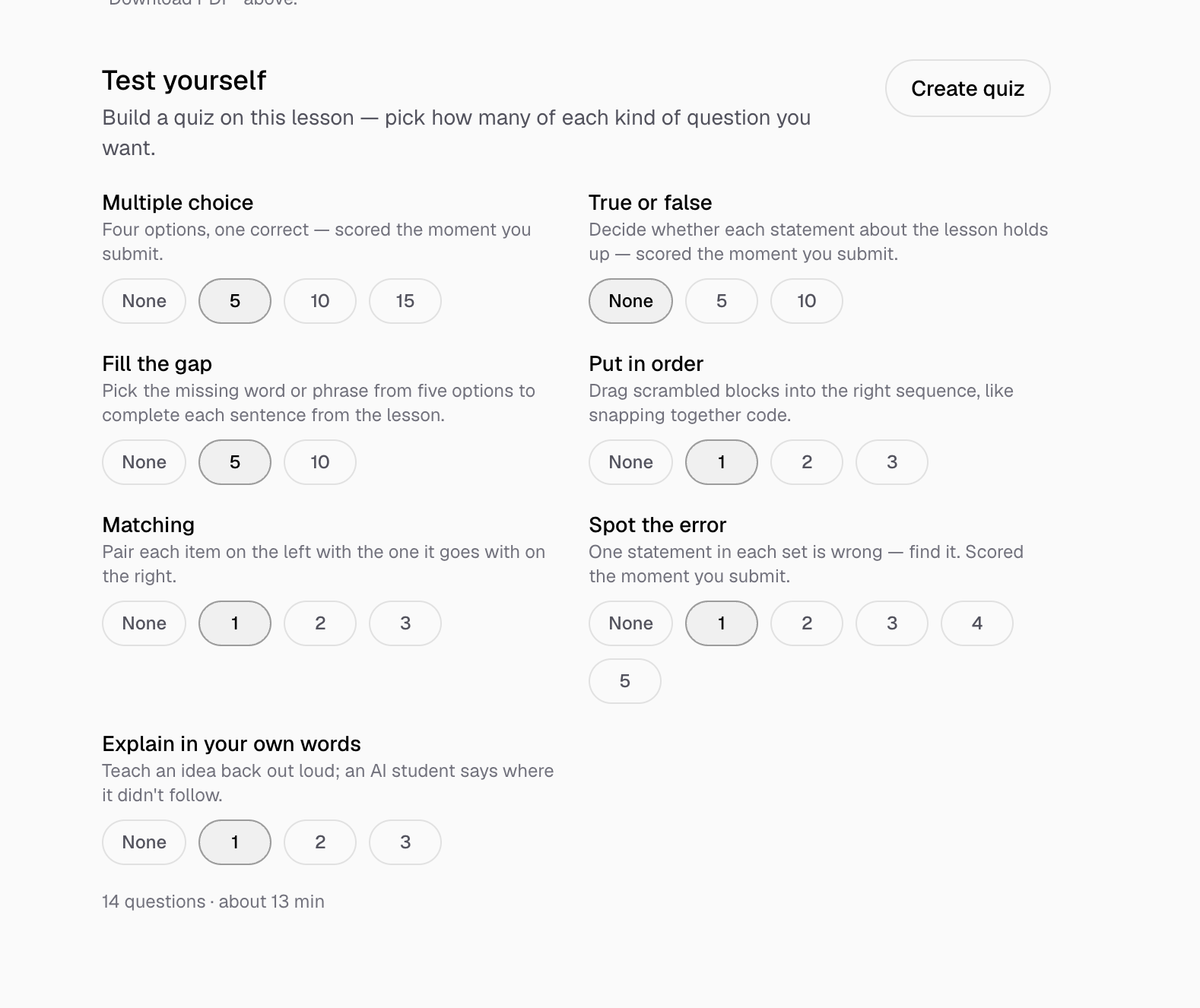
Alongside the teach-back, SoloLearner still has the flexible quiz builder: multiple choice, true/false, fill the gap, put in order, matching, spot the error, and a new "main idea" question. You can rate how sure you are of each answer, which shows whether your confidence matches what you actually know.
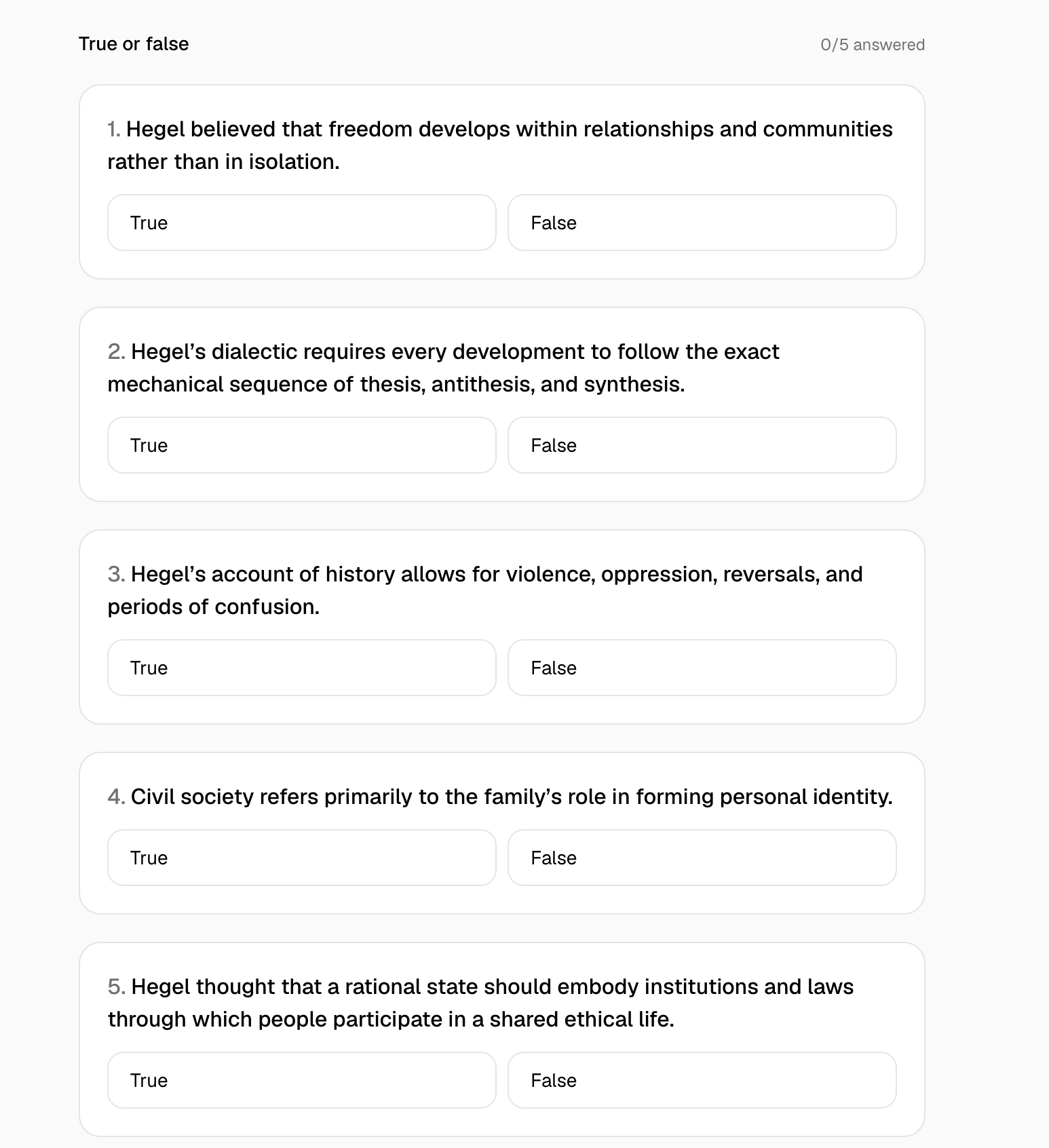
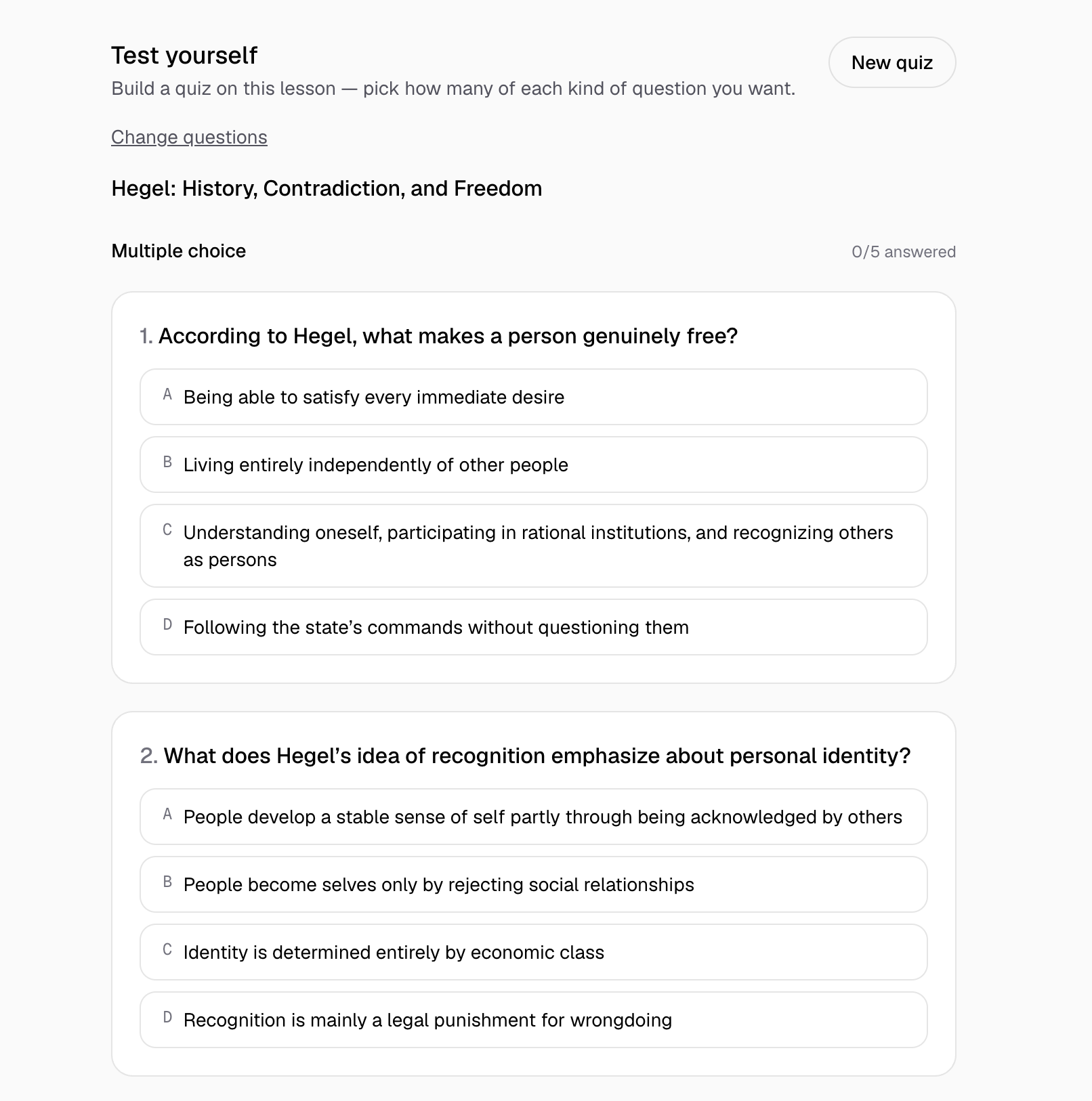
SoloLearner is designed to make learning feel more like having a personal tutor — something you can open whenever you become curious about a subject and leave with a structured understanding of it, rather than a collection of browser tabs.